 Skip to content
Real-Time Risk Detection Across Global Watchlists and Sanctions Data
Compliance teams and risk engineers use DataDock to monitor global sanctions lists, flag high-risk entities, and embed screening directly into their workflows through a developer-ready API. Stop relying on manual lookups and periodic batch scans. Get continuous, structured access to the sanctions data that matters.
- Extract zoning, ownership, and transaction details from public records
- Identify investment trends across commercial and residential markets
- Analyze historical valuations and location-based performance indicators
Daily
Watchlist refresh across global regulatory sources
Sub-100ms
API response time for entity screening queries
100%
Sourced from publicly available regulatory lists
Built for Compliance and Risk Teams
Screening infrastructure that keeps pace with enforcement
Sanctions lists change continuously. Manual processes and legacy GRC tools cannot keep up. DataDock gives compliance, risk, and engineering teams the structured data layer they need to build reliable, audit-ready screening into any workflow.
Banks and Financial Institutions
Fintech and Payment Platforms
Procurement and Vendor Management
Legal and Compliance Functions
Data Coverage
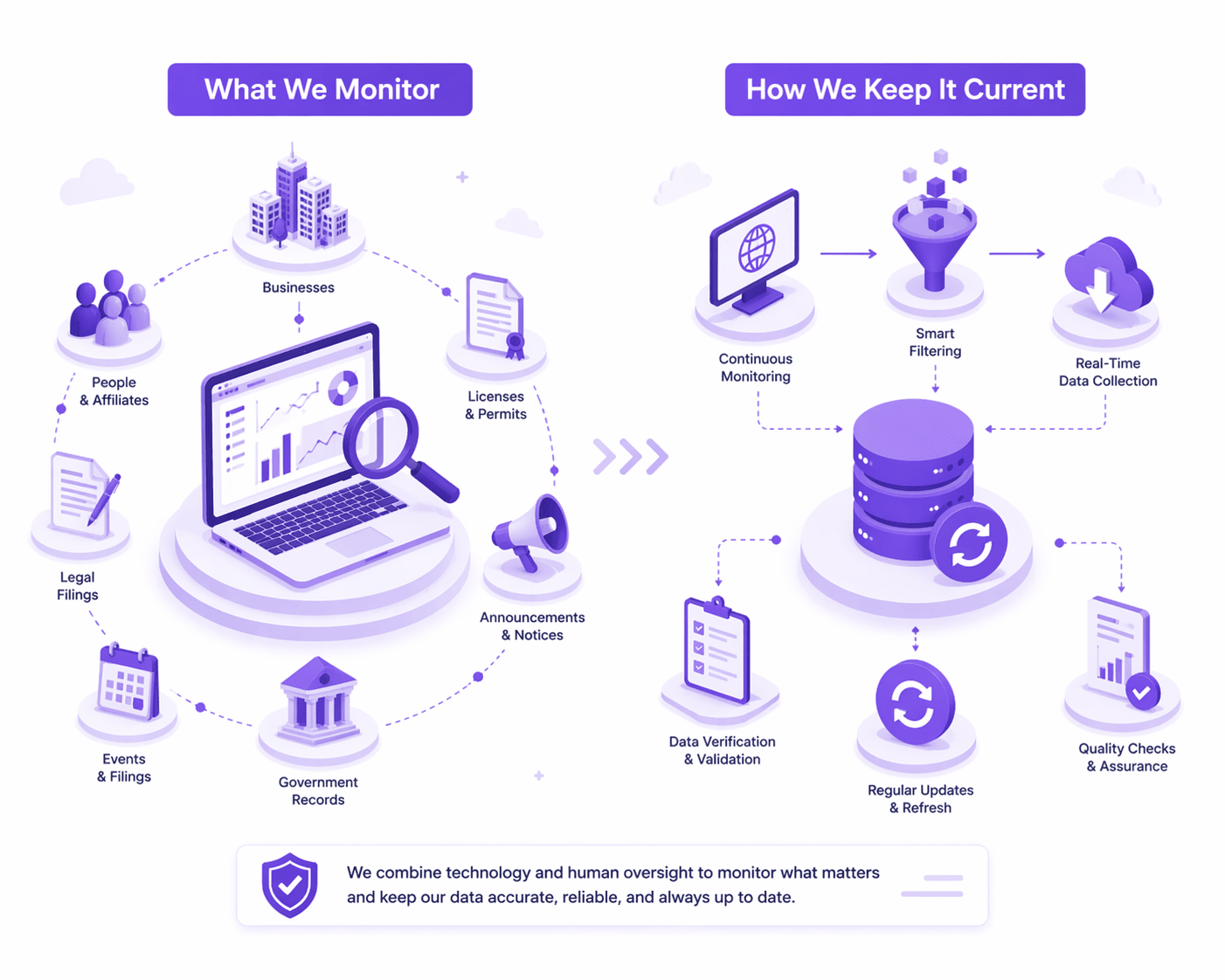
What we monitor and how we keep it current
DataDock continuously ingests, normalizes, and enriches sanctions and watchlist data from publicly available regulatory enforcement sources across international bodies, national agencies, financial conduct regulators, and emerging policy frameworks covering trade restrictions, human rights, and ESG-linked designations.
Every entity record is deduplicated, alias-resolved, and enriched with relationship metadata before being exposed through the API. You get clean, queryable data rather than raw list dumps.
- International and multilateral regulatory body designations
- National agency enforcement lists across major jurisdictions
- Financial conduct and anti-money-laundering enforcement records
- Trade restriction and export control designations
- Politically exposed persons and high-risk individual profiles
How It Works
From watchlist update to screening result in real time
DataDock runs a continuous pipeline from raw regulatory list ingestion through entity resolution, correlation, and alert delivery so your team always screens against current data.
Real-Time Watchlist Monitoring
Entity Resolution and Alias Matching
Intelligent Correlation and Pattern Detection
Alerting and Rule-Based Tagging
Workflow Integration via API
Use Cases
How compliance and risk teams put DataDock to work
From automated KYC to supply chain risk, DataDock powers screening workflows across the full range of compliance use cases.
KYC and Customer Onboarding
Screen new customers and business entities at onboarding against current watchlists. Automate initial risk classification and flag matches for human review before account activation.
Transaction Monitoring
Monitor payment flows for interactions with sanctioned entities or embargoed jurisdictions. Flag transactions in real time rather than surfacing violations during periodic batch review.
Vendor and Third-Party Screening
Automate supplier and vendor screening across procurement workflows. Maintain ongoing monitoring throughout the vendor relationship rather than relying on one-time onboarding checks.
Beneficial Ownership Screening
Identify indirect sanctions exposure through ownership chains. Surface hidden connections to sanctioned individuals or entities embedded in complex corporate structures.
Audit and Regulatory Reporting
Generate structured screening records with full data lineage for regulatory examinations and internal audits. Every result is tied to a specific list version and timestamp for defensible documentation.
Supply Chain Risk Management
Flag geopolitical exposure in cross-border supply chains. Screen counterparties, logistics partners, and international subsidiaries against current trade restriction and export control designations.
API Capabilities
Designed for integration, not just exploration
DataDock exposes all screening capabilities through clean, well-documented API endpoints. Whether you are embedding screening into an onboarding product, a payment platform, or an internal risk engine, the same endpoints serve all use cases without configuration overhead.
- RESTful endpoints with full OpenAPI documentation
- Batch endpoints for bulk historical screening runs
- Streaming endpoints for live transaction monitoring
- Webhook delivery for event-driven alerting
- Role-based access controls and audit logging per API key
- Lightweight SDKs for rapid integration into existing risk engines


What We Monitor
Our platform integrates data from publicly available and ethically sourced sanctions and regulatory enforcement lists across:
- International bodies (e.g., UN, EU)
- National agencies (e.g., U.S. OFAC, UK OFSI, Canadian sanctions authority)
- Financial conduct regulators
- Emerging policy frameworks tied to ESG, human rights, and trade restrictions
This data is continuously normalized, enriched, and exposed through our APIs to power proactive compliance and anomaly detection.
How It Works
1. Real-Time Sanctions List Monitoring
2. Intelligent Correlation & Pattern Detection

3. Alerting and Rule-Based Tagging
4. Workflow Integration via API

Built for Developers, Not Compliance Consultants
- RESTful API access to normalized sanctions datasets
- Role-specific quickstart guides for devs, analysts, and risk engineers
- Webhook support for real-time event-driven alerting
- Batch and streaming endpoints for both historical scans and live triggers
- Lightweight SDKs for rapid integration into existing risk engines


Use Cases
- Automate KYC and third-party screening for faster onboarding
- Flag geopolitical exposure in high-risk supply chains
- Monitor financial transactions for hidden sanctions violations
- Surface regulatory triggers for ESG, humanitarian, or policy-based thresholds
Transparent. Compliant. Responsible.
- We only use publicly available regulatory and watchlist sources
- We’re a founding member of the Ethical Web Data Collection Initiative
- We support easy opt-out processes and individual data protection rights

Ready to build compliant screening into your workflow?
Talk to the DataDock team about integrating real-time sanctions data into your compliance infrastructure.
